

Why Your Gutter Is Pulling Away From the House (and How to Fix It)
Why a small gap matters
When a gutter starts tipping away from the house, the first thing you usually notice is a dark gap between the back of the gutter and the fascia board, or a section that dips lower than the rest. It's easy to put off, but it changes where the water goes.
Instead of running into the gutter, rain and snowmelt can drop behind it, soaking the fascia, running down the siding and landing right along the foundation. A sagging section also collects standing water and debris, which adds more weight and makes the sag worse. Over a Chicago winter, that standing water freezes, and the extra ice load can pull a loose section down further.
Cause 1: Loose or failing fasteners
The most common cause is simply the hardware. Many older homes still have gutters held up with long spikes driven through a tube (a ferrule) into the fascia. Over years of expanding and contracting through freeze-thaw cycles, those spikes slowly work their way back out, and the gutter starts to lean.
Look along the front lip of the gutter. If you see spike heads sticking out, or spaces where a fastener used to be, that's very likely your problem. Fasteners spaced too far apart can cause the same thing, because each one ends up carrying more weight than it was meant to.
Cause 2: Too much weight in the gutter
Gutters are designed to carry water that's moving toward a downspout, not to hold wet leaves, shingle grit and standing water for months. A clogged gutter or downspout can hold a surprising amount of weight, and in winter that weight can turn into ice.
If the sag is worst near a corner or right above a clogged downspout, or you see plants growing out of the gutter, weight is a big part of the story. Ladders leaned against the gutter, heavy snow sliding off the roof and ice building along the roof edge can all add to it.
Cause 3: Rotted fascia board or wrong pitch
Sometimes the fasteners are fine but the wood they're screwed into isn't. If water has been getting behind the gutter for a while, the fascia board can soften or rot, and screws simply won't hold in it anymore. Signs include peeling paint, dark stains or soft spots on the fascia, and fasteners that spin without tightening.
The other possibility is pitch. A gutter needs a slight, steady slope toward the downspout, commonly around a quarter inch for every 10 feet. If a section was installed flat, or has settled so it slopes the wrong way, water sits in the low spot and the extra weight pulls that section down over time.
How each problem gets fixed
Start with a cleaning. Clearing the gutter and flushing the downspout takes the weight off and makes it possible to see what's actually going on. Sometimes a section that looked badly sagged sits much better once it's empty.
For loose fasteners, the usual repair is to replace old spikes with hidden hangers, which screw through the gutter into the fascia (ideally into the rafter ends behind it) and hold far more securely. Adding hangers to close up wide spacing helps too. If the fascia is rotted, that section of wood has to be repaired or replaced first, because new hardware won't hold in soft wood. And if the pitch is off, the gutter is taken down, re-hung at the right slope and resealed at the seams.
If the gutter itself is bent, cracked or leaking at several seams, or the system is old enough that repairs keep coming back, replacing the run with a new seamless gutter can make more sense than patching it.
Can you fix it yourself?
A single-story gutter with a few backed-out spikes is a reasonable DIY job for a confident homeowner with a stable ladder, a drill and new hangers. Work from the ladder, not the roof, and never lean the ladder on the gutter you're trying to fix.
It's worth calling a pro if the house is two stories or more, the fascia looks soft or stained, the sag is long or getting worse, or you'd be working on ice or wet ground. Late fall is the best window for this repair. Once gutters are frozen and full of snow, most of these fixes have to wait until things thaw.
Get your gutters looked at
EcoTouch Service offers gutter services starting at $129, including gutter and downspout cleaning, drain line flushing and gutter repair for leaks, sagging and damaged sections. When a run needs replacing, we also install new gutters, downspouts and gutter guards. First-time customers get 15% off their first service, and Home Care Club members save 15–20% with an annual plan.
We work across Chicago and the suburbs, from our Crystal Lake base in McHenry County to the North Shore and western suburbs. Request a free quote, and we'll take a look at what's pulling your gutter loose and give you a clear price before any work begins.
Before & After
Clogged Gutters
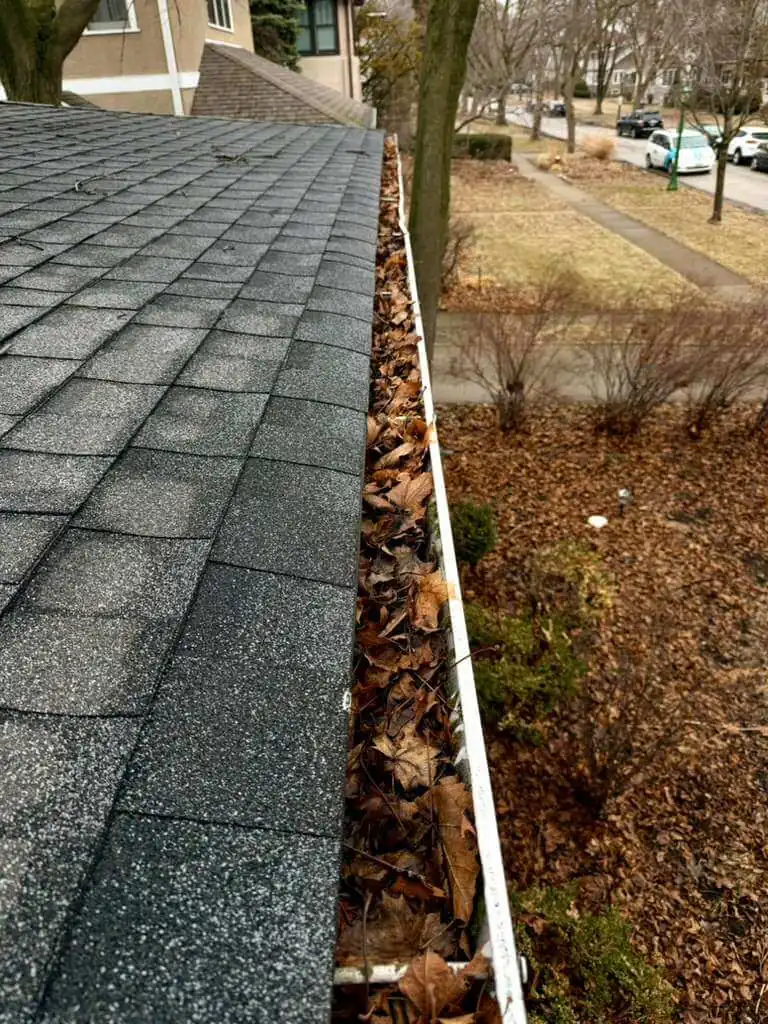 Before
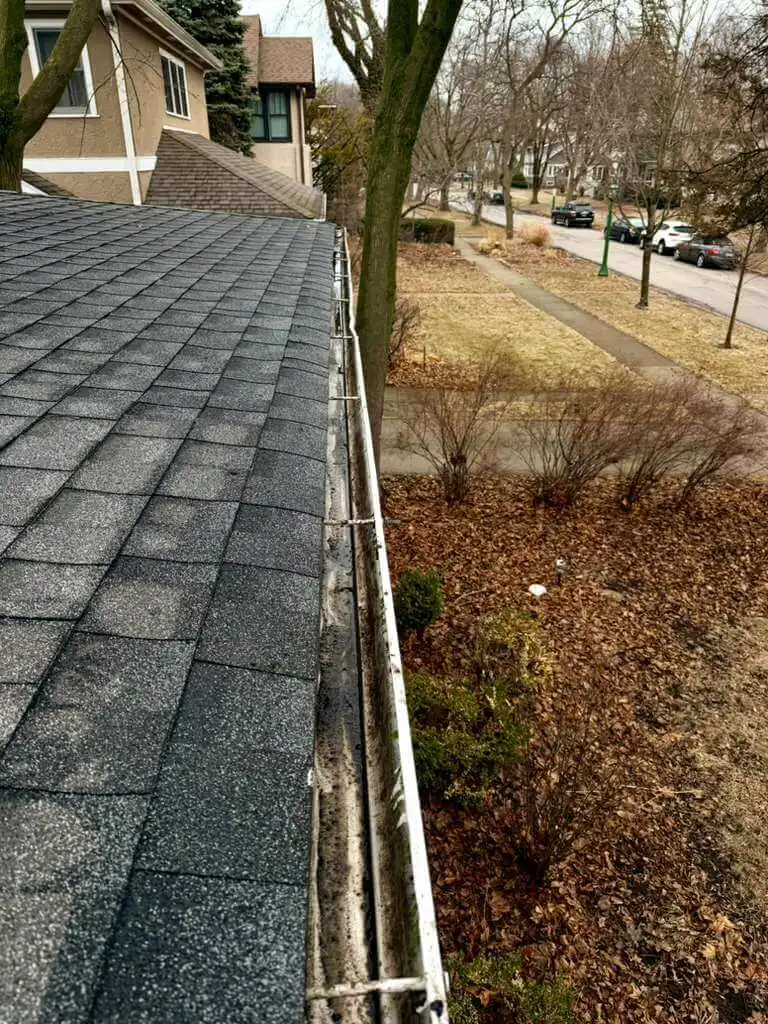 After
Need Gutter Services in Chicago?
We handle this exact job every week across Chicago and the surrounding suburbs. Free, no-obligation quotes.
See our Gutter Services service →